Rivets
Produits
- View as

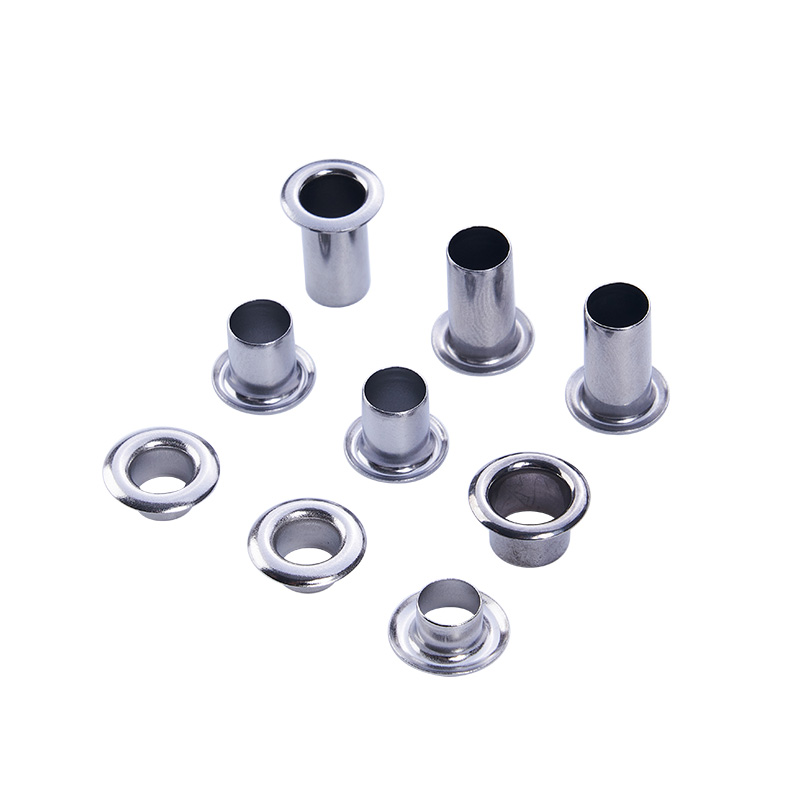
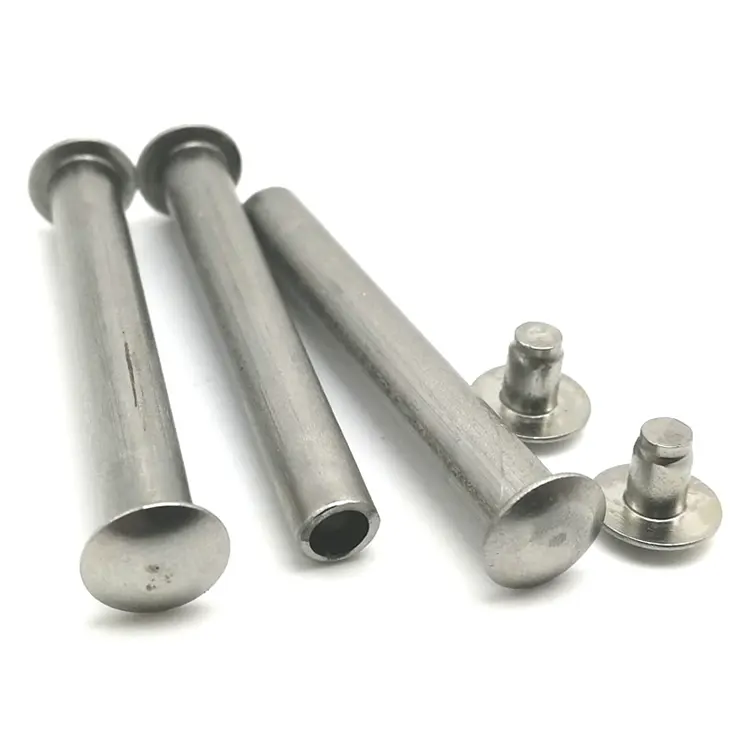
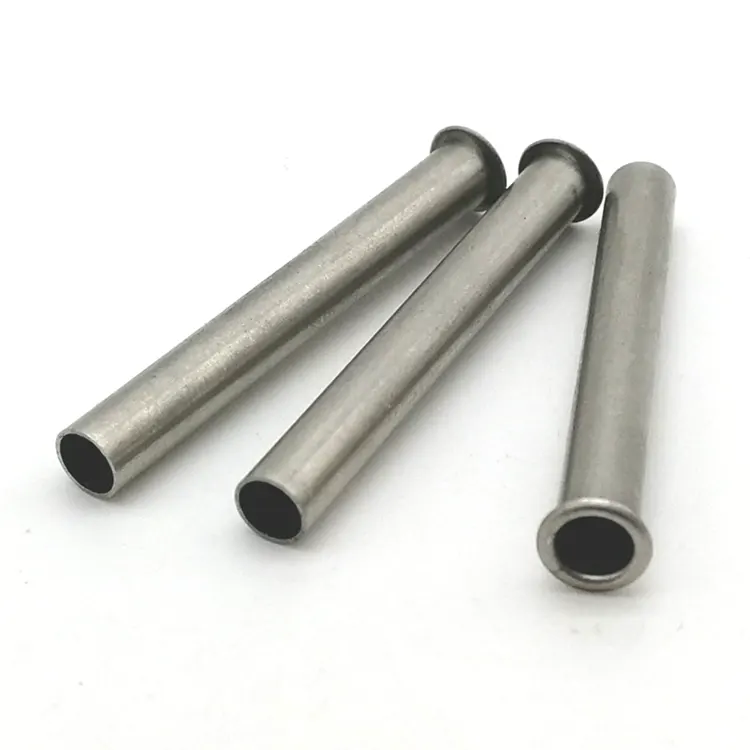
Rivets demi-tubulaires en acier
Les rivets demi-tubulaires en acier de Nuote Metals, une usine chinoise, offrent une solution de fixation rentable pour la fabrication et la construction en général. Fabriqués en acier au carbone à haute résistance, ces rivets offrent une excellente résistance au cisaillement pour les assemblages robustes comme les échafaudages, les équipements agricoles et les meubles en acier. La conception semi-tubulaire s'évase doucement sous la pression, réduisant ainsi la force d'installation tout en maintenant une prise serrée. Disponible avec des diamètres, des longueurs et des finitions personnalisés : zingué, uni ou oxyde noir. Contrairement à l'acier inoxydable, nos rivets en acier offrent une résistance comparable à un prix inférieur, idéal pour les commandes volumineuses. Résolvez les contraintes budgétaires sans sacrifier la fiabilité. Faites confiance à notre usine pour la précision, la cohérence et la livraison à temps de vos rivets demi-tubulaires en acier personnalisés.
En savoir plusenvoyer une demande
Rivets semi-creux à tête ronde
Rivets semi-creux à tête ronde personnalisés – c'est ce dans quoi Nuote Metals, une usine chinoise, excelle. Avec un dôme classique pour une répartition uniforme de la charge et une tige semi-creuse qui se pose facilement sans force excessive, ces rivets conviennent aux meubles, aux intérieurs automobiles et à la quincaillerie générale. Choisissez parmi l'acier, le laiton ou l'acier inoxydable dans des dimensions personnalisées. Résolvez les joints desserrés et les fissures des matériaux avec nos rivets fabriqués avec précision. Faites-nous confiance pour une qualité constante, un délai d'exécution rapide et des solutions sur mesure qui répondent à vos besoins d'assemblage.
En savoir plusenvoyer une demande
Rivets semi-creux à tête cylindrique
Pour une tête modérément bombée qui repose parfaitement au-dessus de la surface, les rivets semi-creux à tête cylindrique personnalisés de notre usine chinoise, Nuote Metals, offrent à la fois fonctionnalité et finition. La tête panoramique offre une bonne force de serrage sans l'encombrement d'un dôme complet, tandis que le corps semi-creux réduit l'effort d'entraînement et évite d'endommager le substrat. Idéal pour les boîtiers électriques, la quincaillerie de meubles et les garnitures automobiles. Disponible en acier, laiton ou acier inoxydable. Obtenez un éclat constant et une prise sûre à chaque fois. Faites-nous confiance pour des rivets fabriqués avec précision qui simplifient votre processus d'assemblage.
En savoir plusenvoyer une demande
Rivets semi-creux en acier inoxydable
La fixation de précision pour les applications exigeantes commence avec des rivets semi-creux personnalisés en acier inoxydable de Nuote Metals, une usine chinoise. La conception semi-creuse réduit la force d'installation tandis que le corps en acier inoxydable offre une excellente résistance à la corrosion et au cisaillement. Parfait pour la quincaillerie marine, l'équipement alimentaire et les assemblages automobiles où la rouille n'est pas une option. Disponible en qualités 304 et 316. Élimine les joints faibles et les défaillances prématurées. Faites confiance à notre usine pour une qualité constante, des tolérances serrées et un délai d'exécution rapide pour les commandes personnalisées.
En savoir plusenvoyer une demande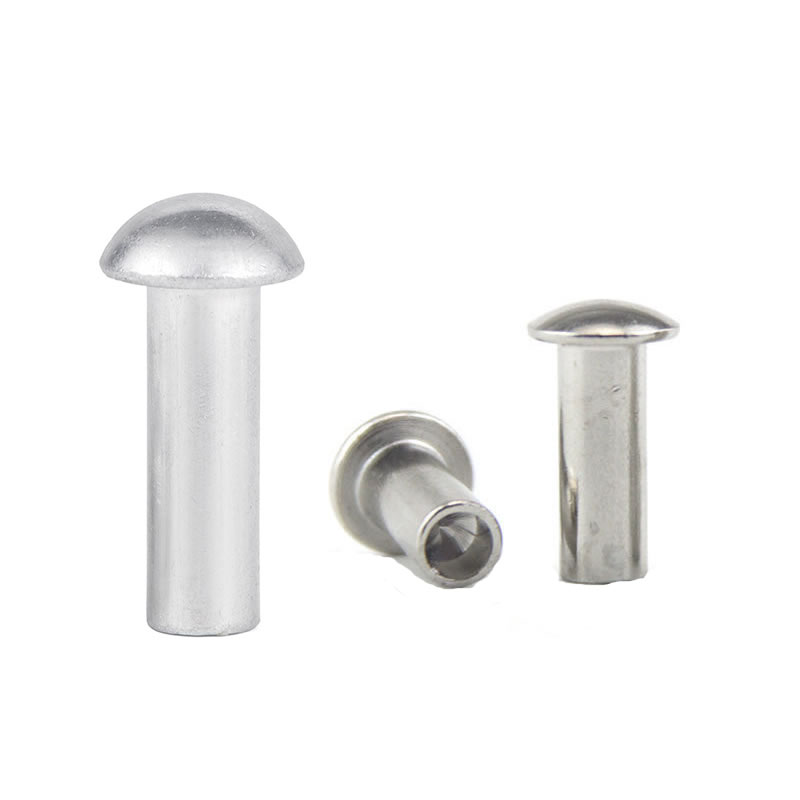
Rivets semi-creux à tête champignon
Lorsque votre projet nécessite un rivet bombé qui répartit la charge uniformément, choisissez des rivets semi-creux à tête champignon personnalisés de notre usine chinoise, Nuote Metals. La tête large protège les matériaux souples comme le cuir et le plastique, tandis que le corps semi-creux se fixe avec moins de force. Idéal pour les bagages, les poignées d'outils et les garnitures automobiles. Disponible en acier, laiton ou acier inoxydable. Faites-nous confiance pour une fabrication de précision qui résout les ruptures de joints et les fissures de surface.
En savoir plusenvoyer une demande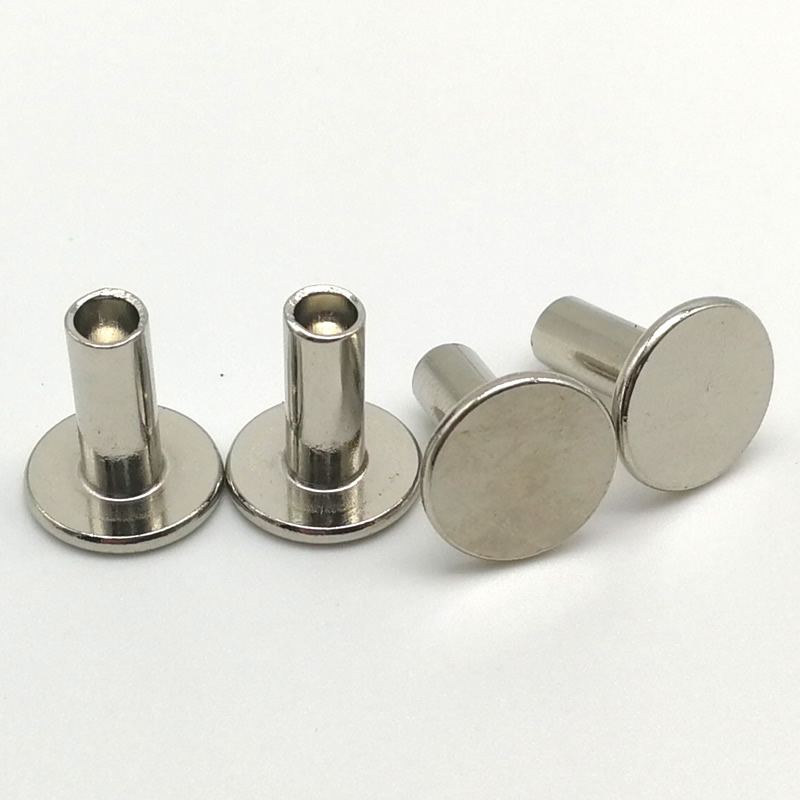
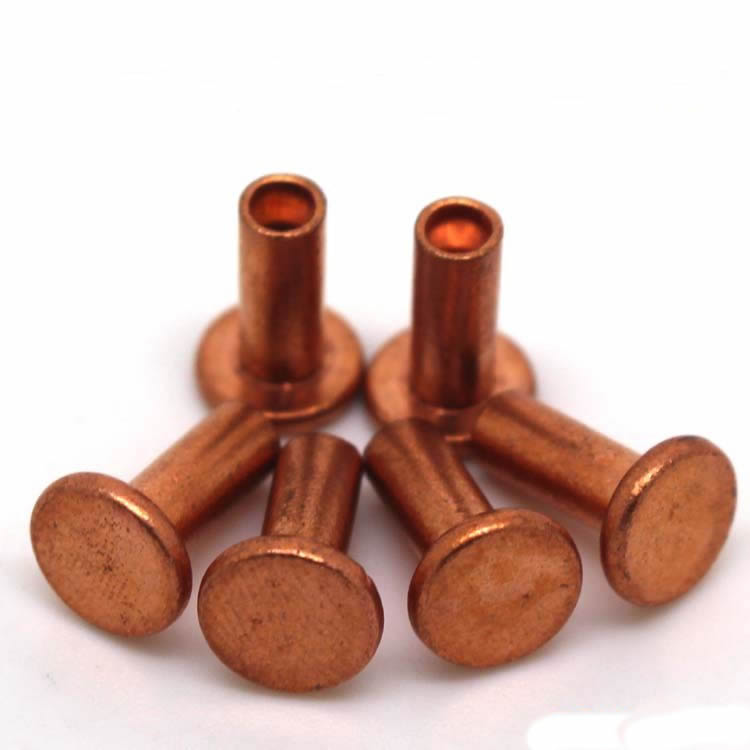
Rivets semi-creux à tête plate
Besoin d'une solution de fixation affleurante ? Nuote Metals de Chine, une usine professionnelle, propose des rivets semi-creux à tête plate personnalisés. La tête plate s'adapte parfaitement aux surfaces des matériaux, idéale pour l'électronique, les plaques signalétiques et les panneaux automobiles. Le corps semi-creux réduit la force de prise tout en conservant une forte adhérence, évitant ainsi les fissures dans les matériaux cassants. Disponible en laiton, acier et acier inoxydable. Résolvez les saillies de surface et les dommages d'assemblage avec des rivets de précision. Faites-nous confiance pour une qualité constante qui améliore la finition de votre produit.
En savoir plusenvoyer une demandeQuels sont les avantages des rivets par rapport aux autres fixations ?
1. Facilité d'installation
Les rivets sont rapides à installer et même entièrement automatisés pour les applications à grand volume, ce qui se traduit par un processus opérationnel simple et efficace.
2. Fiabilité de la connexion
Le processus de rivetage est standardisé, avec un contrôle qualité strict, ce qui permet d'obtenir des connexions très stables. L'inspection visuelle permet une vérification rapide de la qualité de la connexion.
3. Résistance aux vibrations et aux chocs
Les rivets se connectent par déformation ou ajustement serré, offrant une forte force de serrage et une excellente résistance aux vibrations, capables de résister aux vibrations et aux chocs.
4. Faible coût
Les rivets sont faciles à installer et peuvent être entièrement automatisés, ce qui permet d'économiser des coûts de main-d'œuvre importants.
Quels sont les avantages et les inconvénients des rivets fabriqués dans différents matériaux ?
Rivets en aluminium
Avantages : Léger, réduit le poids total du produit, faible coût, adapté aux applications civiles générales.
Inconvénients : Faible résistance à la traction et au cisaillement, inadapté aux pièces à haute résistance, sujet à la corrosion électrochimique au contact de métaux tels que l'acier inoxydable.
Rivets en acier inoxydable
Avantages : Forte résistance à la corrosion, dureté élevée, adapté aux pièces à haute résistance (telles que les équipements marins)
Inconvénients : Coût plus élevé, généralement plus cher que les rivets en aluminium de mêmes spécifications.
Rivets en laiton et cuivre
Avantages : Excellente conductivité (comme la connexion de composants électroniques), bonne résistance à la corrosion.
Inconvénients : Coût plus élevé, plus difficile à traiter.
Rivets en acier
Avantages : dureté élevée, fiabilité de connexion élevée et large applicabilité.
Inconvénients : Comparés à d’autres matériaux, les rivets en fer sont plus sujets à la rouille.
Quelles sont les principales applications des rivets ?
Les rivets ont un large éventail d'utilisations, depuis les petits objets comme une paire de ciseaux jusqu'aux gros objets comme les avions et les navires, ainsi que dans les applications médicales de haute précision.
Fabrication industrielle
Les rivets sont utilisés dans une grande variété de domaines industriels, partout où il est nécessaire de relier deux ou plusieurs matériaux.
Électronique
Les rivets sécurisent les dissipateurs de chaleur et les puces, offrant à la fois un amortissement des vibrations et une réduction du bruit, et sont largement utilisés dans les systèmes de refroidissement de produits électroniques tels que les ordinateurs et les téléphones portables.
Automobile
Les rivets sont largement utilisés pour relier les composants des carrosseries et des châssis automobiles, tels que les portes et les capots. Leurs propriétés légères et résistantes à la corrosion en font une méthode d’assemblage indispensable dans la construction automobile.
Aérospatial
Dans la construction aéronautique, les rivets sont utilisés pour relier différents composants du fuselage, tels que les ailes et les empennages. Des millions de rivets créent des joints à haute résistance et résistants à la corrosion. Les rivets en alliage d'aluminium et de titane sont souvent utilisés pour relier des composants de matériaux correspondants, garantissant ainsi la stabilité dans des environnements extrêmes.
Les rivets sont utilisés partout. Les exemples ci-dessus ne représentent qu'un petit nombre de leurs applications. Nous voyons des rivets partout dans notre vie quotidienne, comme sur les ciseaux, les lits pliants, les poussettes, etc. Les rivets peuvent être personnalisés en différentes tailles et matériaux en fonction de l'application.
Nuote Metals est spécialisé dans l'industrie des rivets depuis plus d'une décennie. Notre usine est située à Dongguan, une ville connue sous le nom de « Usine mondiale », une ville avec une industrie développée et un transport pratique. Cela nous permet de réagir rapidement lors de l'acquisition de matières premières et des traitements de surface, répondant ainsi aux besoins de nos clients en matière d'accès rapide aux échantillons et aux commandes groupées. Nous produisons 10 millions de rivets par jour et disposons de moules de différentes spécifications, nous permettant de produire des rivets aussi petits que 0,8 mm et aussi grands que 10 mm. Nous apprécions vos demandes et visites.



X
Nous utilisons des cookies pour vous offrir une meilleure expérience de navigation, analyser le trafic du site et personnaliser le contenu. En utilisant ce site, vous acceptez notre utilisation des cookies.
politique de confidentialité