Rivets
Produits
- View as
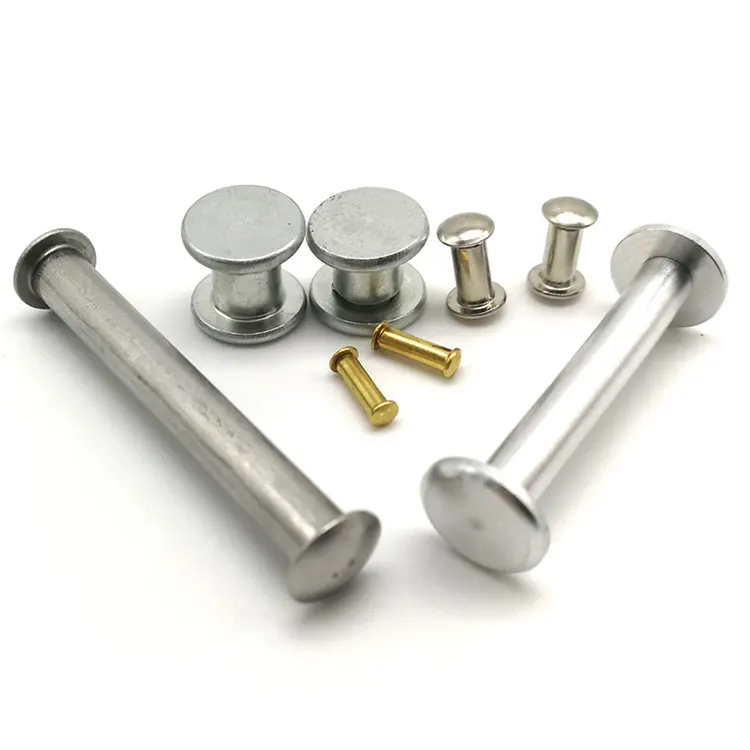
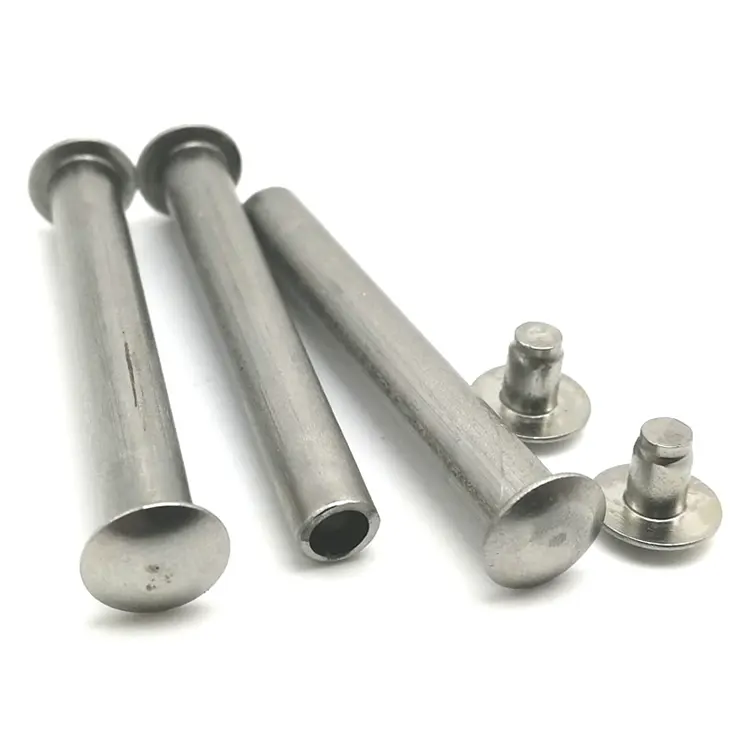
Rivets en deux pièces
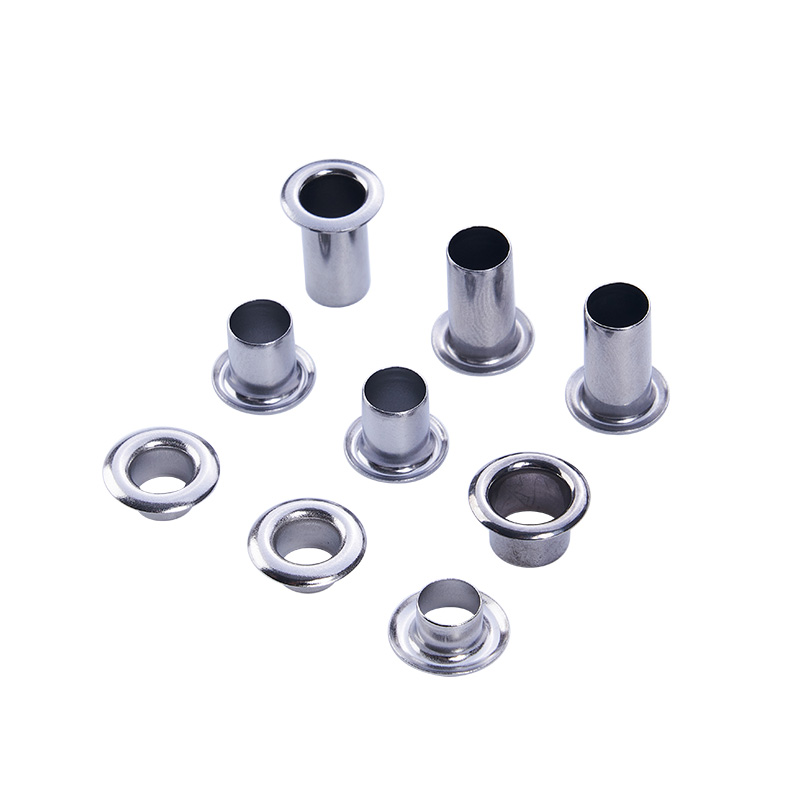
Les rivets en deux pièces se composent généralement de deux parties : un rivet femelle et un rivet mâle. Le rivet femelle possède un trou intérieur à une extrémité et une extrémité fixe à l'autre. Le rivet mâle, comme un soliderivet étape, s'insère dans le trou intérieur du rivet femelle. Pour l'utiliser, fixez d'abord le rivet femelle à un objet, puis insérez le rivet mâle dans le rivet femelle et martelez-le en place, joignant ainsi les deux objets. Cette conception simplifie l'installation tout en offrant une force de connexion fiable. Nuote Metals a 10 ans d'expérience professionnelle dans ce type de rivets en deux pièces, n'hésitez pas à nous envoyer votre dessin.
En savoir plusenvoyer une demande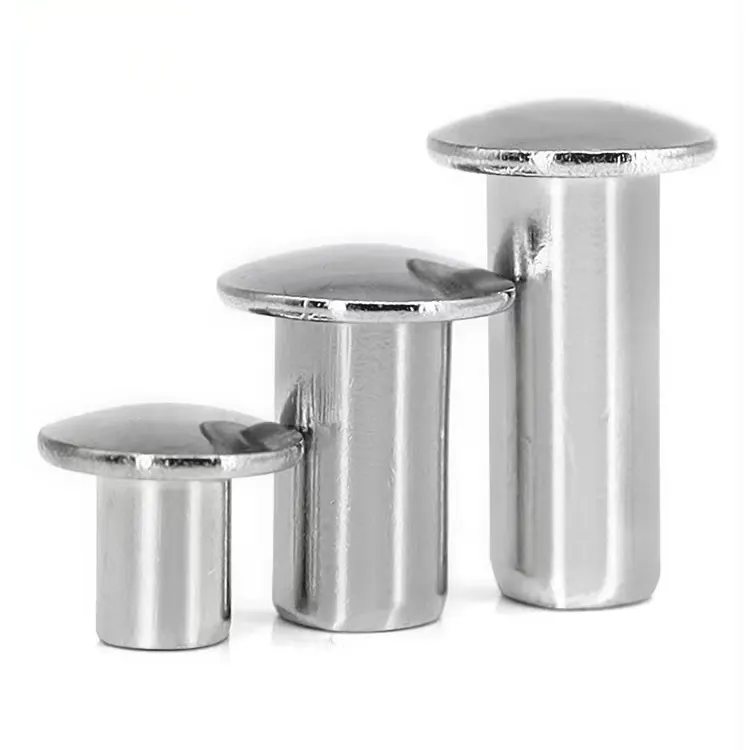
Rivets à tête bombée
Nuote Metals fabrique des rivets à tête bombée dans des conceptions solides et semi-tubulaires – présentant le diamètre de tête le plus large de tous les styles de tête de rivet standard pour une surface d'appui maximale. Disponible en diamètres de tige de 1,5 à 8,0 mm, cinq familles de matériaux et longueurs personnalisées. Qualité certifiée ISO, traçabilité complète et échantillons gratuits disponibles – contactez-nous pour commencer.
En savoir plusenvoyer une demande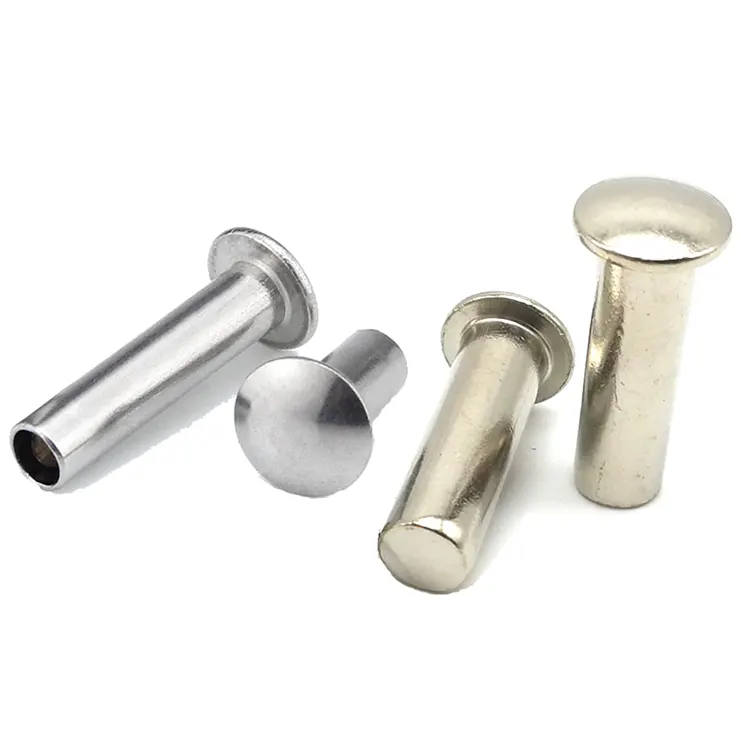
Rivets à tête ronde en acier
Nuote Metals fabrique et vend des rivets à tête ronde en acier dans une variété de finitions, notamment le zingage, le nickelage et le Dacromet. Les rivets à tête ronde présentent une forme de tête semi-circulaire, offrant une excellente résistance à la traction et au cisaillement, capable de résister à de lourdes charges. La conception à tête ronde permet au rivet de mieux s'adapter au composant de connexion lors de la connexion, améliorant ainsi la stabilité et l'étanchéité du joint.
En savoir plusenvoyer une demande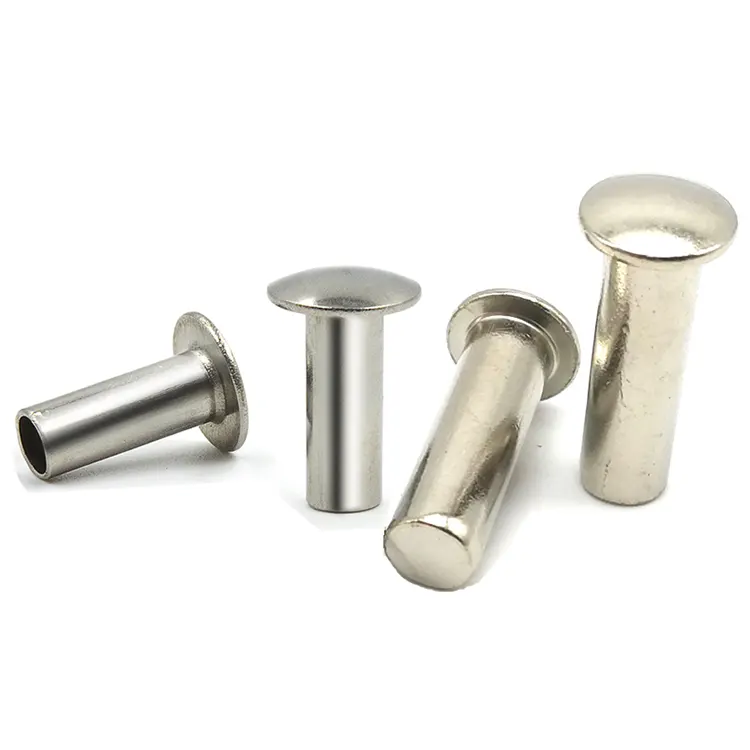
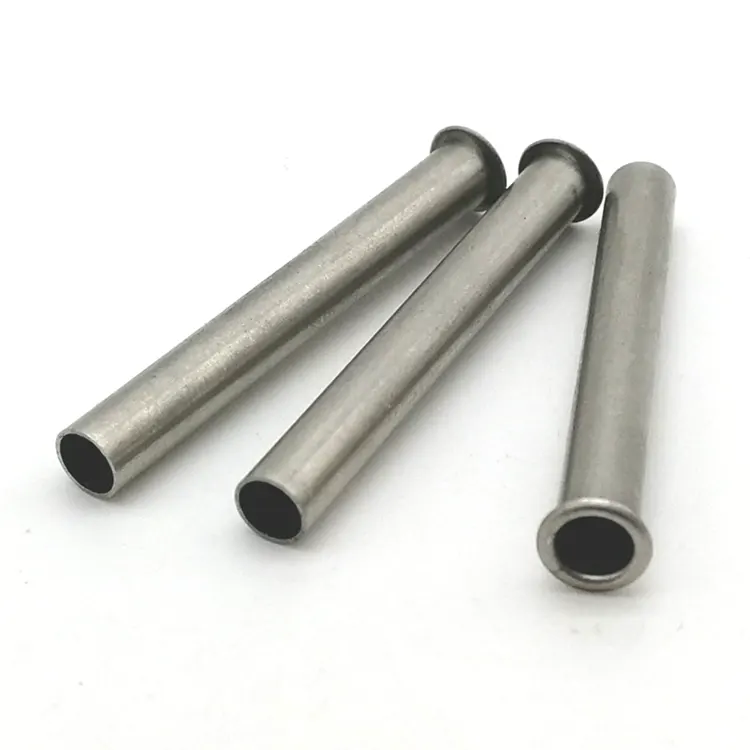
Rivets en acier
Nuote Metals fabrique des rivets en acier dans des conceptions solides, semi-tubulaires et entièrement tubulaires, offrant le rapport résistance/coût le plus élevé de tous les matériaux de rivet. Diamètres de tige de 1,5 à 8,0 mm, finitions zinguées ou oxyde noir. Certifié ISO 9001 : 2015. Échantillons gratuits disponibles. Contactez-nous pour un devis.
En savoir plusenvoyer une demande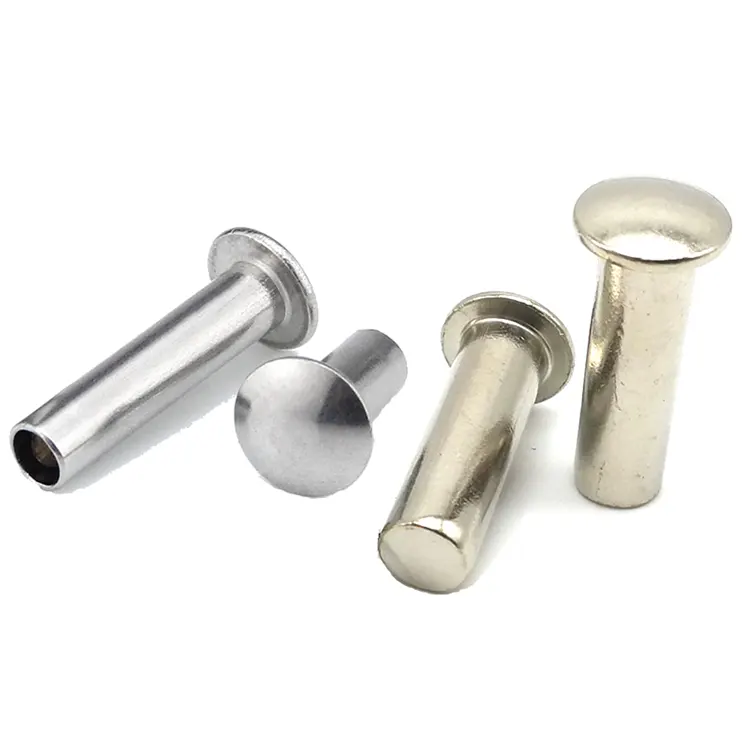
Rivets à tête cylindrique en acier
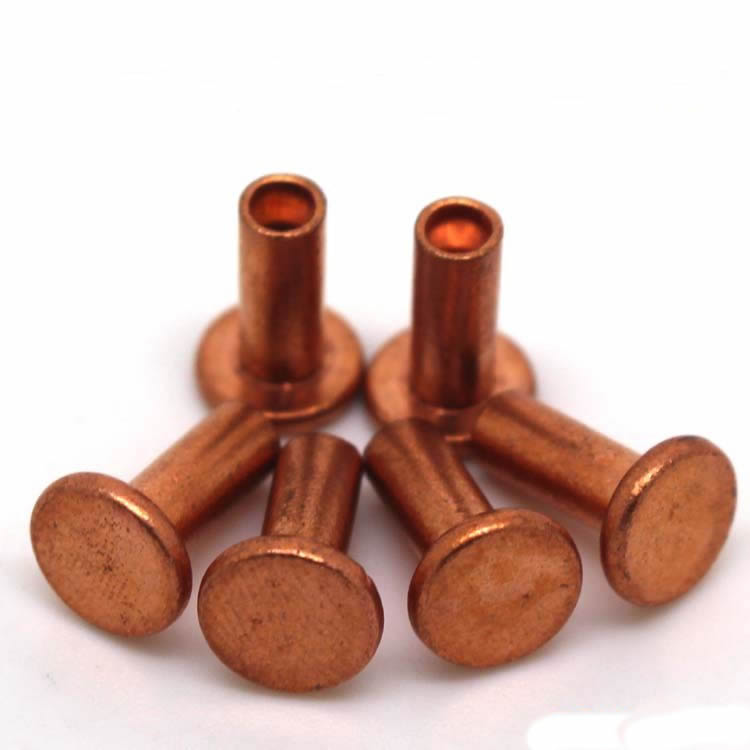
Les rivets à tête cylindrique en acier sont des fixations industrielles courantes utilisées dans un large éventail d'applications, notamment l'automobile, l'aviation et la construction. Nuote Metals est spécialisé dans la production de rivets à tête cylindrique en acier, vendus dans le monde entier. Nous proposons une large gamme de rivets fabriqués dans divers matériaux, notamment le laiton, l'acier inoxydable, l'aluminium et le cuivre. Nous pouvons également personnaliser nos produits avec divers traitements de surface, tels que la galvanoplastie, le décapage et l'anodisation, pour répondre aux exigences des clients.
En savoir plusenvoyer une demande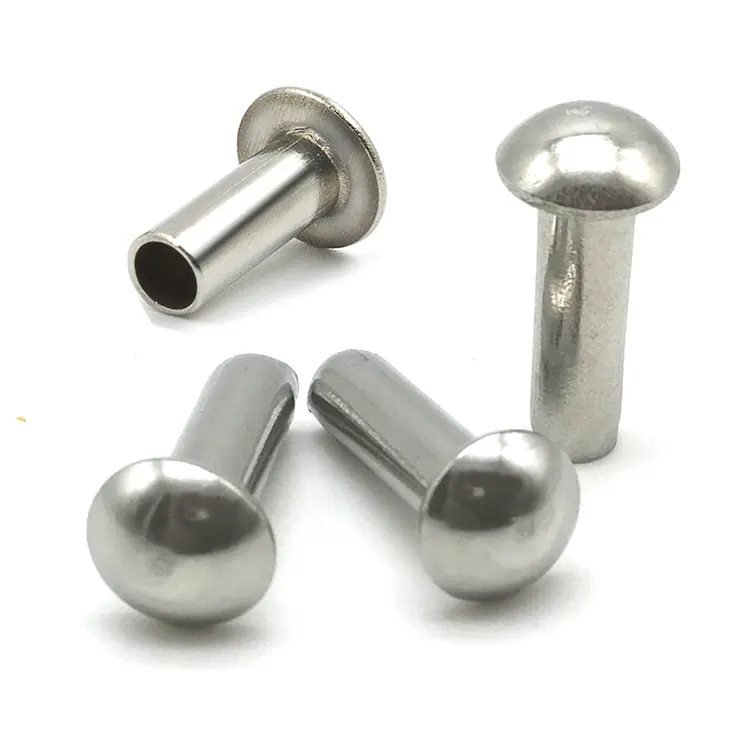
Rivets à tête champignon en acier
Les rivets à tête champignon en acier, également appelés rivets à tête bombée, sont largement utilisés dans les applications industrielles. Leur forme unique en tête de champignon et leur construction en acier offrent une connexion sûre et fiable pour une variété de structures. Nuote Metals est un spécialiste des rivets à tête champignon en acier. Nos rivets sont vendus dans le monde entier et ont gagné la reconnaissance des clients nationaux et internationaux. Nous apprécions vos demandes et l’opportunité de vous servir.
En savoir plusenvoyer une demandeQuels sont les avantages des rivets par rapport aux autres fixations ?
1. Facilité d'installation
Les rivets sont rapides à installer et même entièrement automatisés pour les applications à grand volume, ce qui se traduit par un processus opérationnel simple et efficace.
2. Fiabilité de la connexion
Le processus de rivetage est standardisé, avec un contrôle qualité strict, ce qui permet d'obtenir des connexions très stables. L'inspection visuelle permet une vérification rapide de la qualité de la connexion.
3. Résistance aux vibrations et aux chocs
Les rivets se connectent par déformation ou ajustement serré, offrant une forte force de serrage et une excellente résistance aux vibrations, capables de résister aux vibrations et aux chocs.
4. Faible coût
Les rivets sont faciles à installer et peuvent être entièrement automatisés, ce qui permet d'économiser des coûts de main-d'œuvre importants.
Quels sont les avantages et les inconvénients des rivets fabriqués dans différents matériaux ?
Rivets en aluminium
Avantages : Léger, réduit le poids total du produit, faible coût, adapté aux applications civiles générales.
Inconvénients : Faible résistance à la traction et au cisaillement, inadapté aux pièces à haute résistance, sujet à la corrosion électrochimique au contact de métaux tels que l'acier inoxydable.
Rivets en acier inoxydable
Avantages : Forte résistance à la corrosion, dureté élevée, adapté aux pièces à haute résistance (telles que les équipements marins)
Inconvénients : Coût plus élevé, généralement plus cher que les rivets en aluminium de mêmes spécifications.
Rivets en laiton et cuivre
Avantages : Excellente conductivité (comme la connexion de composants électroniques), bonne résistance à la corrosion.
Inconvénients : Coût plus élevé, plus difficile à traiter.
Rivets en acier
Avantages : dureté élevée, fiabilité de connexion élevée et large applicabilité.
Inconvénients : Comparés à d’autres matériaux, les rivets en fer sont plus sujets à la rouille.
Quelles sont les principales applications des rivets ?
Les rivets ont un large éventail d'utilisations, depuis les petits objets comme une paire de ciseaux jusqu'aux gros objets comme les avions et les navires, ainsi que dans les applications médicales de haute précision.
Fabrication industrielle
Les rivets sont utilisés dans une grande variété de domaines industriels, partout où il est nécessaire de relier deux ou plusieurs matériaux.
Électronique
Les rivets sécurisent les dissipateurs de chaleur et les puces, offrant à la fois un amortissement des vibrations et une réduction du bruit, et sont largement utilisés dans les systèmes de refroidissement de produits électroniques tels que les ordinateurs et les téléphones portables.
Automobile
Les rivets sont largement utilisés pour relier les composants des carrosseries et des châssis automobiles, tels que les portes et les capots. Leurs propriétés légères et résistantes à la corrosion en font une méthode d’assemblage indispensable dans la construction automobile.
Aérospatial
Dans la construction aéronautique, les rivets sont utilisés pour relier différents composants du fuselage, tels que les ailes et les empennages. Des millions de rivets créent des joints à haute résistance et résistants à la corrosion. Les rivets en alliage d'aluminium et de titane sont souvent utilisés pour relier des composants de matériaux correspondants, garantissant ainsi la stabilité dans des environnements extrêmes.
Les rivets sont utilisés partout. Les exemples ci-dessus ne représentent qu'un petit nombre de leurs applications. Nous voyons des rivets partout dans notre vie quotidienne, comme sur les ciseaux, les lits pliants, les poussettes, etc. Les rivets peuvent être personnalisés en différentes tailles et matériaux en fonction de l'application.
Nuote Metals est spécialisé dans l'industrie des rivets depuis plus d'une décennie. Notre usine est située à Dongguan, une ville connue sous le nom de « Usine mondiale », une ville avec une industrie développée et un transport pratique. Cela nous permet de réagir rapidement lors de l'acquisition de matières premières et des traitements de surface, répondant ainsi aux besoins de nos clients en matière d'accès rapide aux échantillons et aux commandes groupées. Nous produisons 10 millions de rivets par jour et disposons de moules de différentes spécifications, nous permettant de produire des rivets aussi petits que 0,8 mm et aussi grands que 10 mm. Nous apprécions vos demandes et visites.



X
Nous utilisons des cookies pour vous offrir une meilleure expérience de navigation, analyser le trafic du site et personnaliser le contenu. En utilisant ce site, vous acceptez notre utilisation des cookies.
politique de confidentialité